Thursday, April 7, 2022

LDH highlights work of regional public health offices during National Public Health Week

The Louisiana Department of Health is celebrating National Public Health Week April 4-10, highlighting the importance of community health and the vital role public health professionals serve in making communities healthier. 

Led by Assistant Secretary Kim Hood, the LDH Office of Public Health (OPH) manages the network of public health units in nine regions throughout the state. Local officials and non-profit organizations partner with OPH to make sure the most vulnerable populations have access to the care and support they need.

Studies show poverty and poor health outcomes are closely linked. When faced with financial hardship, people must decide between their daily living expenses versus their health needs. As a result, they are more likely to go without necessary care such as consulting with a doctor or getting a prescription.

These issues are made even worse during a health crisis such as the ongoing COVID-19 pandemic, as well as major storms which have hit so many Louisiana parishes. In public health, we know in a disaster that vulnerable people are vulnerable.

LDH's public health teams work closely with parish and local partners to overcome impediments to healthier lives. The Office of Public Health provides free vaccines for COVID-19, flu and other diseases. OPH is also on the frontlines in the preparation and response to natural disasters such as hurricanes and other emergencies. Dedicated public health workers also help keep the food supply safe, ensure the quality of drinking water, provide parents and kids with nutritious foods, and work behind the scenes in many ways to improve and protect health.

Here are some of the ways your Office of Public Health works to keep you safe and healthy.

Regional services

Greater New Orleans (Region 1) is focusing on the totality of health — addressing the social determinants of health and health justice. Region 1 OPH’s efforts utilize community health workers and social workers as conduits between the State and safety-net institutions to shore up hepatitis C, hepatitis B and HIV prevention and treatment. Region 1 also working closely with Metropolitan Human Services District and other behavioral health entities to provide competent and comprehensive care to all patients or clients who have experienced toxic stress and healthcare inaccessibility.

Throughout the state, the Special Supplemental Nutrition Program for Women, Infants, and Children (WIC) provides healthy foods and other support for women who are pregnant, breastfeeding or postpartum and infants and children up to age five. Other WIC services include breastfeeding support via live video with lactation consultants who are available 24/7, nutrition education and referrals to other social services. In the Greater Baton Rouge area (Region 2), WIC is now providing additional money to buy fruits and vegetables through September 2022. Region 2’s 11 WIC clinics serve more than 12,000 participants per month.

Many residents in river and coastal parishes (Region 3) continue to strive to overcome the devastation of Hurricane Ida, especially in lower Lafourche and Terrebonne parishes. Families remain displaced, and the public health unit serving South Lafourche was significantly damaged. The town of Golden Meadow has generously been providing temporary space for public health services. In addition, Region 3 is implementing the Community Healthways program which provides additional assistance for basic needs including rent and utilities for families coping with hardships, such as those caused by Hurricane Ida.

LDH staff and partners remain active in Acadiana (Region 4) hosting many events and health fairs encouraging COVID-19 testing and vaccinations. Region 4 staff will be working with physicians and nurses in the region to educate moms about the importance of Safe Sleep involving babies with the goal of lowering the instance of sudden unexpected infant death (SUID). With summer approaching, staff will work to educate the community on drowning prevention.

In the Southwest (Region 5), the Office of Public Health is committed to improving the lives of residents still dealing with the devastation of Hurricane Laura on top of ongoing issues like food insecurity and financial hardship. Region 5 Community Health Workers are stationed in parish health units, ready to listen to residents’ concerns and help direct them to helpful resources.

In Central Louisiana (Region 6), OPH staff continue to work to provide communities access to vital healthcare resources. Since 2020, Region 6 teams have tested more than 65,000 people for COVID-19 and have provided immunizations to 55,000 people. Most recently, Region 6 OPH partnered with Sleeves Up Avoyelles to host the Central Louisiana Rural Health Summit, addressing health disparities that disproportionately affect rural communities and provide solutions and resources to target these issues.

In Northwest Louisiana (Region 7), the staff has teamed up with the Women’s Council of Shreveport/Bossier on identifying ways to assist with meeting the health needs of birthing persons and children to cope with pressing issues including mental health, safe sleep and gun violence.

In the Northeast (Region 8), a newly formed health disparities team’s main goal is to develop programs that promote equitable health outcomes for those who are most vulnerable. Another key focus in Region 8 is fighting the opioid crisis, including partnering with other state and community partners to create the first Opioid Substance Use Recovery Coalition to help communities that are especially impacted.

In the Florida and Northshore parishes (Region 9), LDH teams are focused on serving women, infants and children in Livingston, St. Helena, St. Tammany, Tangipahoa and Washington parishes through the WIC Program. Parish health units in Livingston, Amite, Hammond, Bogalusa, Franklinton and Slidell provide assistance to breastfeeding mothers with prenatal breastfeeding education support, breastfeeding education, healthy WIC food packages, peer counseling, breast pump support (free hospital grade pumps and personal electric pumps), consultations with certified lactation consultants and lactation rooms at most WIC sites.

Monday, March 28, 2022

LDH's Omar Khalid shares his experience on TV's 'Jeopardy!'

(Omar Khalid, senior advisor to Office of Public Health Assistant Secretary Kim Hood, appeared on “Jeopardy!” on March 24, where he finished in second place against Tim McCaigue, an app developer from California, and Ciara Donegan, an undergraduate student from Maryland who won first place.)

The Louisiana Department of Health's Omar Khalid, right, appeared on "Jeopardy!" on March 24 with Ken Jennings as host.

By OMAR KHALID | Chief of Staff, LDH Office of Public Health

I’ve been a “Jeopardy!” viewer for most of my life and have taken the contestant test at least 10 times over the years. Normally, you take the 50-question test, with 10 seconds to type in a response for each question, and never hear back. This time, I found an email in my inbox’s spam folder inviting me to take a follow-up test! I was actually sick with COVID and there were no available slots left, and I was devastated that I may have missed my one shot. Luckily, I got a follow-up email about a month later and scheduled another test. It was identical to the first test, but you take it on Zoom so they can see it’s really you. Again, there was no response on how I did.

About two months later, I got yet another email inviting me to play a mock game of “Jeopardy!” on Zoom. We used clicking pens as buzzers, played a few clues in a game setting against other would-be contestants, and gave a short interview to test out how we would perform on TV. Passing that step put us into a pool of contestants eligible to tape an episode of “Jeopardy!” — but we were told only about a third of those in the pool would get the call to tape an episode. I was quite surprised when I did get a call about a week later inviting me to fly to L.A. to be on the show.

The production itself was extremely professional, and as a public health employee I was pleased to see how incredibly safe they were with COVID-19 precautions. Because my taping was nearly at the height of the Omicron peak, we were required to submit a PCR test before our flight and tested again 12 hours before our taping. The set itself had a COVID safety coordinator and everyone was masked for the entirety of the day. When you see me on TV, those were the only moments I spent without my mask on from 7 a.m. to 7 p.m. There was no studio audience, but the other contestants sat physically distanced in the audience seating and watched each other’s games, as an entire week’s episodes were recorded in one day.

Since longtime host Alex Trebek lost his battle with pancreatic cancer, there has been no permanent host on the show. We found out 74-game champion Ken Jennings would be our host on the day of taping. He was very warm and funny — and a bit taller in person — and I personally would like to see him become the new permanent host.

As for my game, I’ve been getting a lot of kudos for being a car expert since I answered four out of five questions in the “Classic Cars” category (and a $2,000 clue on the Le Mans race), but I definitely feel this is unwarranted. They were just bits of trivia I had stored in my head from 40 years on Earth. There were a number of clues that were quite easy, but I have to say our "Final Jeopardy!" was one of the easiest I’ve seen in a long time. I had little chance to overcome the leader in the game but at least I got to go out on a correct response! 

I was also surprised to learn that I did not have any incorrect responses, not an unheard-of feat on the show. It happened most recently a few days before my episode, but it felt good to bat 1.000. Unfortunately, it was not enough to win the day against two very strong opponents, but as the process for even appearing on the show proved, there is definitely an element of luck involved at every step. I have no regrets about how I played and have been supremely overwhelmed at all of the love and support I’ve received in the days since my episode aired.

I recommend the experience to anyone. The Jeopardy! Anytime Test is free to take online at any time. Your results are held for one year, and then you can take it again. Even if you don’t think you’d do great on the show, I encourage you to take it just for fun!

Thursday, February 3, 2022

Adult Protective Services investigated 1,662 exploitation cases in 2021

By ELI MELILLO | Public Information Officer, LDH Bureau of Media and Communications

In 2021, Adult Protective Services investigated 1,662 cases of abuse (emotional, physical, sexual or financial), neglect, exploitation or extortion of disabled adults between the ages of 18-59.

As part of the Louisiana Department of Health's Office of Aging and Adult Services, Adult Protective Services is responsible for investigating reports of abuse and arranging for services to protect these vulnerable adults. The impact of victimization of vulnerable adults is often detrimental to their long-term safety and stability and physical and mental health.

"It's a lasting effect that is seen throughout the community," said Adult Protection Specialist Supervisor Anona Bowie.

Human traffickers target potential victims throughout our communities, particularly those individuals residing in shelters, participating in out-patient treatment programs, interacting online with persons unknown to them, and other circumstances wherein the traffickers gain knowledge of the vulnerabilities of the victims. Human traffickers identify and target individuals with little or no familial involvement and lack of social interaction. The traffickers prey on vulnerable adults to gain access to their monthly financial benefits and sometimes to coerce or force the vulnerable adults into situations involving labor or sex trafficking. Human traffickers gain access and control of the victims' financial benefits but fail to provide the victim with basic needs other than housing. Often, even the housing provided by traffickers is inadequate to meet the needs of the victims.

Human trafficking victims with vulnerabilities or disabilities may exhibit limited mental capacity to make decisions, advocate for themselves or complete even the most basic activities of daily living independently. "Let's say the victim requires specific medical therapies … When the trafficker takes control, the individual may no longer have access to essential medical treatments or care — and money and other benefits intended for the individual are diverted to the trafficker. Consequently, the vulnerable adult goes without necessities such as access to medicine, healthy foods, and medical care," said Bowie.

Adult Protective Services Assistant Program Director Shannon Ioannou urges people to be vigilant and aware of peculiar changes within their neighborhoods and communities. Typically, multiple victims are housed in the same residence together and are frequently relocated by the traffickers to avoid suspicion by neighbors or other community members. Community members may notice these vulnerable adults publicly soliciting individuals for food and money or observe the victims being required to fulfill roles of manual labor or other tasks that appear to pose immediate risk of harm to adults. Victims may exhibit other behaviors such as trespassing, vagrancy and shoplifting, which are often actions indicative of possible human trafficking and exploitation of these vulnerable adults.

If you suspect abuse, neglect, exploitation or extortion of a vulnerable or disabled adult age 18-59, contact Adult Protective Services at our 24-hour hotline, 1-800-898-4910.

If you suspect abuse, neglect, exploitation, or extortion of adults age 60 or older, please contact Elderly Protective Services at 1-833-577-6532 or 225-342-0144.

Please contact 911 immediately for situations posing an imminent risk of harm to vulnerable adults.

Tuesday, January 18, 2022

Thanks for all you do, Region 1 staff!

Ahead of the Christmas holiday Dr. Shantel Hebert-Magee, medical director for the Greater New Orleans region, held an awards ceremony to recognize her staff for all of their accomplishments in 2021. Dr. Hebert-Magee's staff has taken the many demands of the COVID-19 crisis in stride, especially around immunizations. Here's a look at some of her staff awards and what they were recognized for. 


Rha'Keisha Wyre, Assistant Regional Administrator: As Dr. Hebert-Magee's No. 2, Rha'Keisha embodies all of the values you find in a public servant, as well as a leader. Rha'Keisha's main goal is to highlight the importance of community engagement in the area that includes Jefferson, St. Bernard, Plaquemines and Orleans Parish — home to some of the most populous and diverse communities in the state. Rha'Keisha uses her people-centric skills to to keep up morale, bring on new talent, expand Region 1's operations and coordinate with all of the region's public partnerships. She did all this with empathy during the most challenging of circumstances.

Janila Bailey, Delgado Administrative Coordinator: As a recipient of one of Dr. Hebert-Magee's clerical awards, Janila was recognized for stepping up in the Delgado public health unit (PHU) to help cover vacancies and staff changes. Her approach to customer service is excellent and Dr. Hebert-Magee said Janila is someone that can always being counted on during times of uncertainty and when difficult tasks come up.

Van Coulon, Clerical Supervisor: Van got a promotion in 2020, moving up from Public Health Unit Clerk. In addition to Van's positive attitude and professionalism, Dr. Hebert-Magee recognized Van's willingness to "go the extra mile." He literally went the extra mile this summer: When evacuating after Hurricane Ida due to lack of power and water, Van was activated while en route to Texas and turned around without hesitation to assist with shelter operations and credentialing emergency medical staff.

Amanda Melancon and Jeanne Marie Baudouin: Amanda and Jeanne received Dr. Hebert-Magee's immunization award for "troubleshooting vaccine shortages, minimizing waste, and ensuring access to our most vulnerable populations." Their efforts helped Region 1 administer more than a 500,000 vaccinations.

Blanche Lott, Regional Office Manager: Dr. Hebert wrote of Blanche: "Though shy and humble, through her organizational skills, she has delivered greater strategic value to the region and is at the core of our daily operations, maintaining a can-do outlook throughout the pandemic."

Mary Vu, Health Educator, WIC: Using her Vietnamese language skills, Mary is crucial to outreach in Region 1's sizable Vietnamese community, assisting in translations both verbal and written to get WIC information out to this population. Mary took the lead in setting up WIC services for Hurricane Laura refugees, allowing Region 1 to begin servicing WIC families within hours.

Kyler Forte, Health Educator, WIC: Dr. Hebert-Magee wrote that Kyler "has been instrumental in providing WIC services during the COVID-19 pandemic, Hurricane Laura and Hurricane Ida." In addition to providing curbside services at the PHU, Kyler assisted without hesitation in servicing WIC participants during Hurricane Ida state office closure while her own home was damaged and without electricity. 

Dana Washington, Regional Nutritionist: Dr. Hebert-Magee wrote that Dana worked creatively during the COVID-19 crisis to set up curbside and drive-through pick-ups for the WIC population, and traveled to the region daily after Hurricane Ida from Mississippi to assist with incident command operations for shelter operations.

Veronica Attaway, Registered Nurse, Region 1 PHUs: An 18-year LDH veteran, Veronica approaches her job as a calling, Dr. Hebert-Magee wrote. "Veronica goes wherever she is needed in the community, even at short notice, after hours, or in an unfamiliar part of town."

Megan Hill, Registered Nurse, Region 1 PHUs: Megan is known for her compassion and willingness to help, working "tirelessly through our emergency response" despite being relatively new to LDH, Dr. Hebert-Magee wrote.

Vanessa Hargrove, Disease Intervention Specialist Supervisor: Dr. Hebert-Magee wrote: "Vanessa served as a resource for the emergency response staff in the medical operations credentialing section as well with the Command Staff. She began her response efforts working as a resource member on the medical operations section but she quickly became the Medical Resource Section Lead after a few adjustments in our Incident Command Structure."

Jenny Bagert, Strategic Partner, Together Louisiana: Dr. Hebert-Magee wrote: "Jenny has been instrumental to our community outreach and vaccine uptake in our most vulnerable neighborhoods. Using creativity and ingenuity she has improved medical literacy, healthcare engagement and LDH visibility."

Thursday, December 16, 2021

Pinecrest Supports and Services Center celebrates 100 years of service to Louisiana

By SHANNON THORN | CEO, Pinecrest Supports and Services Center

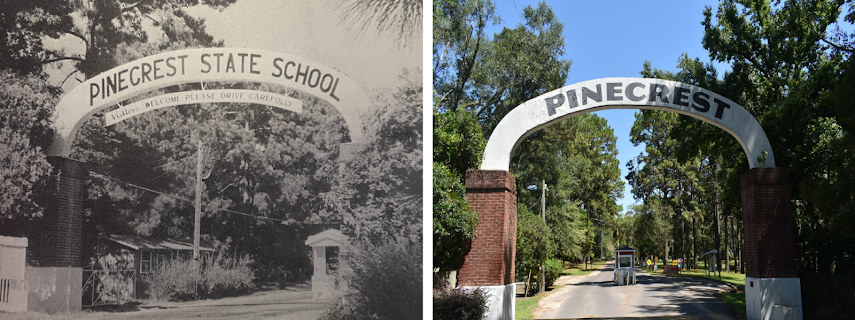
Pinecrest State School opened in 1921 as a facility for individuals with intellectual disabilities. One hundred years later, it remains in operation as Pinecrest Supports and Services Center, specializing in the treatment of people with comorbid intellectual and developmental disabilities, and complex medical, behavioral and psychiatric support needs.

In 1884, 129 patients were admitted to East Louisiana Hospital from the New Orleans Asylum. These individuals would now be what we refer to as individuals with an intellectual disability. In 1914, the Superintendent of East Louisiana Hospital recommended the establishment of a specialized facility for these patients, as the mental health hospital was not the best place to meet their unique needs. Subsequently, legal authorization from Legislative Act. No. 141 of 1918 created Pinecrest.

In 1921, 1,000 acres of land was purchased from the Beauregard Development Company utilizing portions of Camp Beauregard that were employed during World War I. On December 21, 1921, Pinecrest officially opened with a total of 37 patients. The total annual budget for 1921 was $50,000. During these times, the facility was completely self-sufficient with a working vegetable farm, dairy farm operation, and livestock such as chickens, hogs and cattle. This was during a time when the only way the facility could operate was through self-sufficiency due to budget constraints. Years later, additional funding was given to the agency so they could begin to purchase instead of produce.

Now known as Pinecrest Supports and Services Center, the facility consists of 947 total acres with 163 acres leased to the Ward 9 recreational facility, giving Pinecrest 784 acres to care for and operate on. There are 335 total buildings on campus with 158 heated and cooled buildings. There is an on-grounds bakery, greenhouse, canteen, medical observation unit, fully functional dental clinic, park, baseball field, an equine therapy program, a barn with various animals for pet therapy, swimming pool, gymnasium, and school operated by the Department of Education which is open year round focusing on the specific curricula needs for the individuals supported. The Pinecrest school also has a GED program.

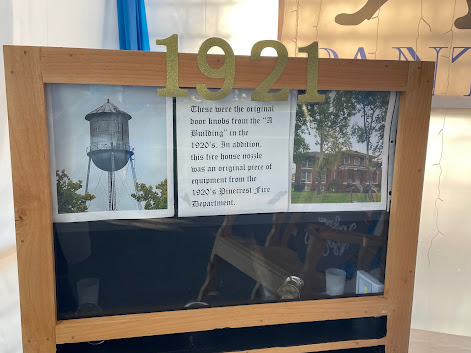
This shadowbox displays the original knobs from the A Building in the 1920s, as well as a fire house nozzle that was an original piece of equipment from the 1920s Pinecrest Fire Department.

On campus, 40 buildings are currently used as residential homes. There are 12 day service buildings used for skill acquisition training activities, active treatment and training, and vocational learning opportunities. Pinecrest has various work training options including the on-campus canteen, bakery, on-grounds delivery services, food service skills through the kitchen, landscaping and lawn care through the greenhouse, contracts with community-based agencies, and many more job opportunities.

In December 1921, Pinecrest had 37 residents and during the 1970s the facility had more than 2,100 residents. In 2021, Pinecrest supported 430 residents with intellectual disabilities who have significant medical, behavioral and psychiatric challenges. It also has well over 100 individuals with autism who receive specialized programs and training for their unique needs. The facility also has a specialized geriatric program for individuals with an intellectual disability and their unique issues associated with aging and dementia. Additionally, it offers a wide array of clinical services such as psychology, occupation therapy, physical therapy, speech therapy, medical services, nursing, recreation services, psychiatry and neurology, among other specialized clinical services needed by the individuals supported by Pinecrest.

From 37 patients with limited services and a budget of $50,000, to a complex treatment-based organization, Pinecrest has for 100 years continuously supported individuals with intellectual and developmental disabilities that many others cannot serve or refuse to serve  over the years. Now, its current focus is on specialized programming and individualized treatment and skills acquisition training focused on independence, autonomy, self-advocacy and skills development to increase each resident’s ability to live independently.